For many hospitality businesses, recruitment has become a continuous challenge.
Hotels and restaurants need reliable people, experienced managers and skilled chefs. Vacancies must be filled, rotas need to be covered and standards must be maintained—often while the business is operating at full pace.
But filling individual vacancies is only part of the answer.
The bigger challenge is building a team in which the right people work well together, understand the property and share the same commitment to the guest experience.
A hotel can employ talented individuals and still struggle if the team lacks balance, leadership or a clear sense of direction.
A collection of individuals does not automatically become a team
A strong hospitality team is not created simply by recruiting the most impressive CV for every position.
The Executive Chef may be highly accomplished. The General Manager may have years of experience. The Restaurant Manager and Front of House Manager may each be excellent at their jobs.
However, if their management styles, priorities and expectations are incompatible, the operation can quickly become fragmented.
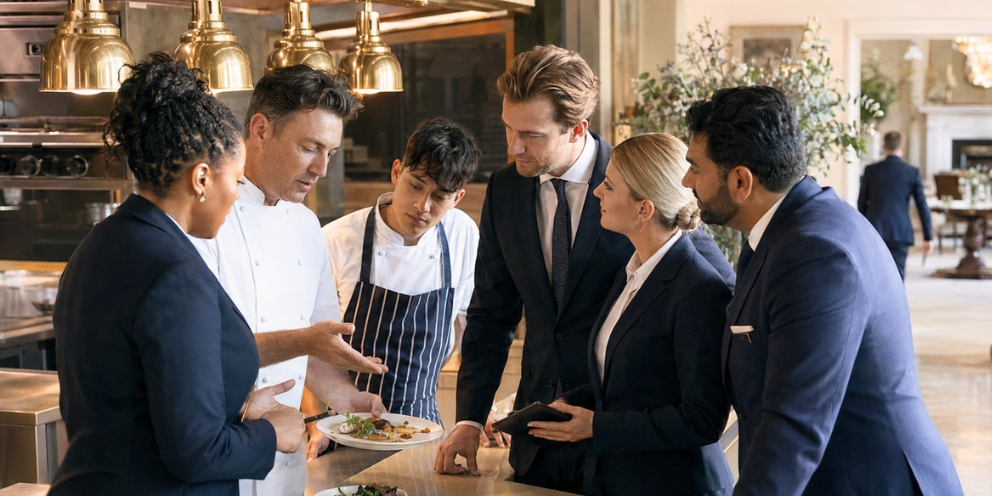
Hospitality depends on cooperation between departments. The kitchen affects the restaurant. Reception influences housekeeping. Sales commitments affect operations. Management decisions ultimately reach the guest.
When communication breaks down between these areas, even experienced people can find it difficult to perform at their best.
Building the right team therefore requires a wider view of recruitment. It means considering not only whether someone can do the job, but also how they will contribute to the operation as a whole.
Recruitment should begin with the business—not the vacancy
When an important position becomes available, it is tempting to begin searching immediately. However, replacing the previous employee with someone who has a similar background may not solve the underlying need.
The more useful questions are:
- What does the business need from this appointment now?
- What is working well within the existing team?
- Where are the operational or leadership gaps?
- What type of personality would complement the current management structure?
- Does the property need stability, creativity, stronger controls or a new commercial direction?
- What will success look like after six or twelve months?
The answers may reveal that the business needs something different from the person who previously held the role.
A hotel entering a period of growth may require a commercially focused manager who can develop people and introduce stronger systems. A kitchen with talented chefs but inconsistent performance may need a calm leader who can establish structure and retain the team.
Understanding the real requirement makes it possible to recruit for the future rather than simply replace the past.
Leadership appointments influence the entire operation
Senior and departmental appointments rarely affect only one area of a hospitality business.
A General Manager shapes culture, standards and communication across the property. An Executive Chef influences food quality, kitchen retention, supplier relationships, profitability and the reputation of the restaurant.
A strong Front of House Manager can improve the arrival experience, develop reception staff and provide better communication between guests and operational departments. The right Restaurant Manager can strengthen service consistency, team confidence and revenue performance.
These people become part of the way the property operates every day.
This is why leadership recruitment should never be reduced to matching keywords between a job description and a CV. The recruiter must understand the influence the appointment will have throughout the business.
Balance is as important as individual ability
Successful teams contain different strengths.
Some people are natural organisers. Others bring creativity, commercial awareness, calm leadership or the ability to motivate those around them. Hospitality businesses need a balance of these qualities.
Recruiting several people with the same management style can create just as many problems as recruiting someone without the necessary experience.
A team full of strong personalities may struggle to collaborate. A team that avoids difficult decisions may lack direction. An operation focused entirely on cost control may gradually lose the service and individuality that guests value.
The aim is not to recruit identical people. It is to bring together professionals whose experience and abilities complement one another.
That requires a recruiter to understand both the candidate and the team they may be joining.
Culture matters—but it should not mean recruiting more of the same
“Cultural fit” is frequently discussed in recruitment, but it can be misunderstood.
It should not mean finding someone who thinks, behaves and has followed exactly the same career path as everyone else. Strong businesses benefit from new ideas, varied experience and people who are prepared to challenge established ways of working constructively.
The important question is whether the candidate’s professional values align with those of the organisation.
Do they care about standards? Do they treat colleagues with respect? Can they communicate honestly? Are they willing to take responsibility? Do they understand the level of service the property promises its guests?
A good appointment should support the culture while also bringing something valuable that the team does not already have.
The strongest person may not be actively looking
When building a management or operational team, the ideal candidate may not be applying for advertised positions.
Experienced hospitality professionals are often busy succeeding in their current roles. They may be open to a conversation, but only if the opportunity is relevant, credible and handled discreetly.
Professional headhunting allows hospitality businesses to reach beyond the active applicant market. It creates access to people who might consider moving for the right property, leadership team, career opportunity or professional challenge.
This is particularly important when recruiting Executive Chefs, General Managers, Directors, Operations Managers, Restaurant Managers and other key personnel.
The objective is not to generate the largest possible number of applications. It is to identify the individuals who could make the right contribution to the team.
Team building continues after the appointment
Recruitment does not end when an offer is accepted.
Even an excellent candidate needs a clear understanding of the role, the business and the expectations placed upon them. A professional introduction and structured onboarding process can make a significant difference.
The existing team should understand why the appointment has been made and how the new person’s responsibilities will fit alongside their own. Clear communication prevents uncertainty and helps working relationships develop more quickly.
Employers should also allow the new recruit time to understand the property before expecting immediate transformation. Listening, observing and building trust are important parts of effective hospitality leadership.
The recruiter’s role is to establish a strong foundation by ensuring that the client and candidate enter the relationship with realistic, shared expectations.
Building teams with long-term value
At Eastfield Associates, we believe the best hospitality recruitment decisions are made by looking beyond the immediate vacancy.
We take time to understand the property, its existing team, its standards and its future direction. We also speak openly with candidates about their experience, ambitions, working style and the type of environment in which they are most likely to succeed.
Our specialist hospitality recruitment and headhunting service focuses on professional chefs, directors, managers and key operational personnel for hotels, restaurants and hospitality businesses across the UK, Europe and Southeast Asia.
We do not believe that sending more CVs produces better recruitment.
The real value comes from identifying people who can perform their role, complement their colleagues and contribute positively to the long-term success of the business.
Is your next appointment about filling a vacancy—or strengthening your team?
Before beginning your next recruitment search, consider what the appointment needs to achieve beyond completing the rota or filling an empty position.
The right hospitality professional should bring more than experience. They should improve the balance, capability and confidence of the team around them.
If you are looking for an experienced chef, director, manager or key operational professional, Eastfield Associates would be pleased to discuss the wider needs of your business.
Contact Roger Brockbank at roger@eastfieldassociates.co.uk or visit www.eastfieldassociates.co.uk.
Eastfield Associates—Right People. Right Roles. Stronger Teams.