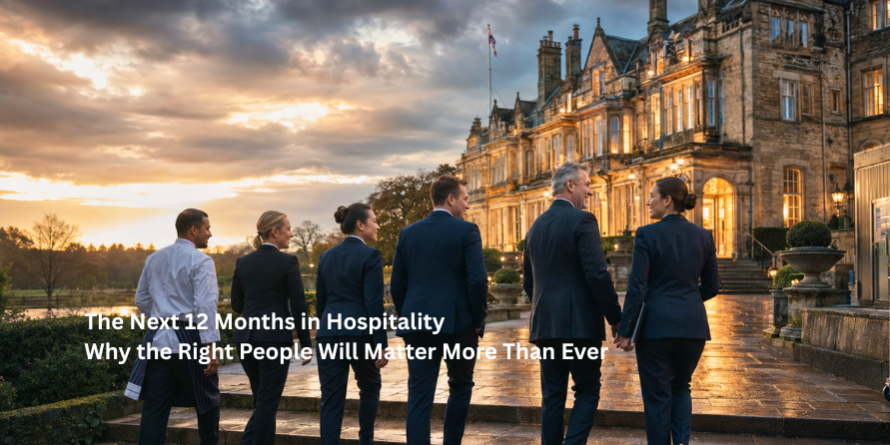
Hospitality has never been an industry for standing still.
Hotels and restaurants are constantly adapting to changing guest expectations, rising operating costs, new technology and an employment market that can shift very quickly.
Over the next twelve months, these pressures are unlikely to disappear. In many cases, they will become more complex.
The challenge for hospitality businesses will not simply be finding enough people. It will be identifying the chefs, directors, managers and key operational professionals who can protect standards, lead teams and make commercially sound decisions in a demanding market.
That is where specialist hospitality recruitment becomes particularly valuable.
Cost pressures will continue to influence every appointment
The cost of running a hotel or restaurant remains a major concern.
Food, energy, labour, insurance, maintenance and business rates all affect already tight operating margins. The Bank of England reported in July 2026 that cost pressure within consumer services was particularly high in hospitality because of food and energy prices.
When costs rise, recruitment decisions naturally receive closer scrutiny.
Hotels and restaurants cannot afford to appoint someone simply because they are available. Every senior or operationally important recruit must be capable of adding genuine value.
An Executive Chef may need to combine creativity and consistent food quality with tighter purchasing, menu engineering, waste control and team retention.
A General Manager may need to improve revenue while protecting the guest experience. Departmental managers must maintain standards without allowing rising costs to undermine service.
The strongest candidates will understand that commercial awareness and hospitality standards are not opposing priorities. Successful businesses need both.
Hospitality businesses may operate with leaner teams
Economic uncertainty and increased labour costs are already influencing recruitment activity. The Office for National Statistics reported that some businesses were holding back from recruiting because of uncertainty and higher employment costs.
This does not mean that hospitality businesses can stop investing in people.
It means each appointment becomes more important.
A leaner management structure needs capable people who communicate well, make confident decisions and accept responsibility. There is less room for unclear roles, weak leadership or departmental divisions.
Hotels and restaurants will increasingly need professionals who can work across the operation, understand how departments affect one another and help colleagues perform effectively.
Finding these people requires more than advertising a vacancy and waiting for applications. It requires a clear understanding of the business and the specific contribution the appointment needs to make.
Leadership will be tested
The next twelve months will place considerable demands on hospitality leaders.
Managers may be asked to control costs, retain good people, introduce new technology, respond to changing booking patterns and maintain guest satisfaction—all at the same time.
The technical requirements of a role remain important, but leadership qualities will carry even greater weight.
Can the candidate communicate calmly when the operation is under pressure? Can they introduce change without losing the confidence of the team? Will they address poor performance constructively? Can they recognise when standards are beginning to slip?
A strong hospitality leader does not simply manage today’s operation. They create stability and direction when circumstances change.
This is why senior hospitality appointments should never be made by comparing job titles alone. A CV can tell you where someone has worked. It cannot fully explain how they lead, the environment in which they perform best or how they will respond to the particular challenges facing your property.
The best candidates may remain difficult to reach
Vacancy levels may rise and fall, but the strongest hospitality professionals are not necessarily the people submitting the most applications.
Experienced Executive Chefs, General Managers, Hotel Directors, Operations Managers and Restaurant Managers may be performing successfully in their current roles. They are unlikely to respond to every vacancy they see.
However, they may listen when approached with an opportunity that genuinely matches their ambitions, experience and values.
Professional headhunting will therefore remain important.
Reaching passive candidates requires industry contacts, discretion and the ability to present an opportunity accurately. It also requires an honest understanding of what the employer can offer.
A strong candidate will want to know more than the salary and job title. They may ask about investment, ownership, decision-making authority, team structure, working culture and the future direction of the property.
A specialist hospitality recruiter should be able to discuss these matters confidently and professionally.
Retention will be as important as recruitment
Recruiting the right person is only part of the challenge. Hotels and restaurants must also create an environment in which good people want to remain.
Unclear expectations, weak communication and constant operational pressure can quickly damage morale. When experienced people leave, their knowledge, relationships and influence often leave with them.
The right managers can make a significant difference to retention.
They set expectations, recognise good work, deal with problems and help employees see where their careers could develop. They also create the structure that allows people to perform confidently.
For employers, this means recruitment decisions should consider the candidate’s effect on the wider team.
Will they develop people or simply direct them? Can they earn respect? Do they communicate consistently? Will their management style complement the existing leadership structure?
The best appointment should not only fill one position. It should make the people around that position stronger.
Technology will change roles—but hospitality will remain human
Digital guest services, automation and AI are becoming increasingly established within hospitality.
These tools can reduce repetitive administration, improve access to information and give hotel teams more time to concentrate on guests. However, technology also changes what businesses need from their managers.
Future hospitality leaders must be comfortable with data and digital systems, but they must also understand that technology should support the guest experience rather than replace genuine hospitality.
The most valuable professionals will be able to balance efficiency with personality. They will know where automation can help and where a guest still needs an informed, reassuring and human response.
Hotels and restaurants will therefore need people who are adaptable, commercially aware and open to change—without losing sight of the standards and personal service upon which hospitality is built.
Guest expectations will continue to rise
Guests remain conscious of value, but value does not always mean choosing the lowest price.
It means feeling that the experience justified the price paid.
Cleanliness, food quality, personal service, efficient communication and attention to detail all contribute to that judgement. Online reviews then make those experiences visible to future customers almost immediately.
Operational inconsistency can quickly become a reputational problem.
The right hospitality professionals understand that guest satisfaction is created across the entire business. A memorable stay or dining experience is rarely the work of one department.
Chefs, managers, reception teams, restaurant staff and operational leaders must work together. Recruitment should therefore support the complete guest journey rather than treat every vacancy as an isolated requirement.
Why Eastfield Associates is well placed to help
Eastfield Associates is not a general recruitment agency attempting to cover every possible industry.
Hospitality is our specialist area.
We understand hotels, restaurants, food and beverage operations, guest expectations and the commercial pressures facing the industry. We recruit professional chefs, directors, managers and key operational personnel across the UK, Europe and Southeast Asia.
Our approach begins with understanding the client.
What challenges is the business facing? What is the existing team missing? What type of leader will complement the property? What must this appointment achieve over the next twelve months and beyond?
We then look beyond the CV.
Experience matters, but so do leadership style, personality, commercial awareness, professional ambition and long-term suitability.
Through focused recruitment, professional networking and discreet headhunting, we can also approach hospitality professionals who may not be actively applying for new positions but could be interested in the right challenge.
The objective is not to send the greatest number of CVs. It is to introduce candidates who have a credible reason to succeed within the business.
Prepare now for the challenges ahead
The next twelve months will test many hospitality businesses.
Costs will need to be controlled. Teams will need to be retained and motivated. Technology will continue to change operations, while guests will still expect genuine personal service and consistently high standards.
The hotels and restaurants best placed to respond will be those with the right people making the right decisions.
If you are considering a key appointment, planning for growth or strengthening your leadership and operational teams, Eastfield Associates would be pleased to discuss your requirements.
Contact Roger Brockbank at roger@eastfieldassociates.co.uk or visit www.eastfieldassociates.co.uk.
Eastfield Associates—Right People. Right Roles. Ready for What Comes Next.